[ EVENT RECAP ]
Open AGI Builders Day: Sentient × Shanghai Jiao Tong University
Around 200 attendees, six builder showcases, and one shared question: how do AI capabilities become products people keep using?
- EVENT DATE
- LOCATION
- Shanghai, China
- VENUE
- Shanghai Jiao Tong University · Minhang campus
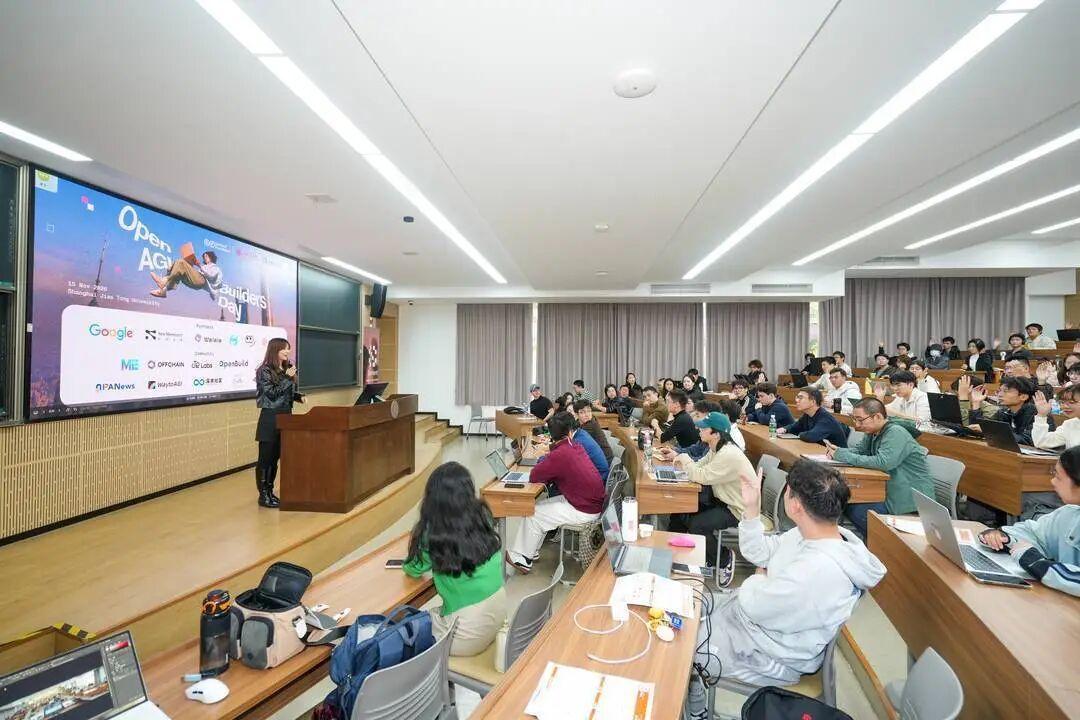
On November 15, 2026, around 200 attendees joined Open AGI Builders Day at Shanghai Jiao Tong University’s Minhang campus. Co-hosted by Sentient and the university’s Innovation and Entrepreneurship Association, the afternoon brought builders together to explore how AI can become part of everyday life and business.
An opening presentation from Sentient, six builder showcases, and a panel on real-world adoption returned to a shared question: as AI becomes more capable, how do we turn that capability into products people continue to need?
Building through open collaboration
Anita from Sentient APAC opened with “Why Open AGI Will Win,” outlining a vision for community-built, community-owned AGI. She introduced THE GRID as a way to connect agents, models, data, and compute, alongside ROMA, Model Fingerprinting, and the Dobby open-source model family.
The focus was on making improvement sustainable: developers contribute better tools, users pay for products they value, and feedback and incentives support further development. Open collaboration extends beyond model access to how contributions connect and improve through use.
Six builders, six practical challenges
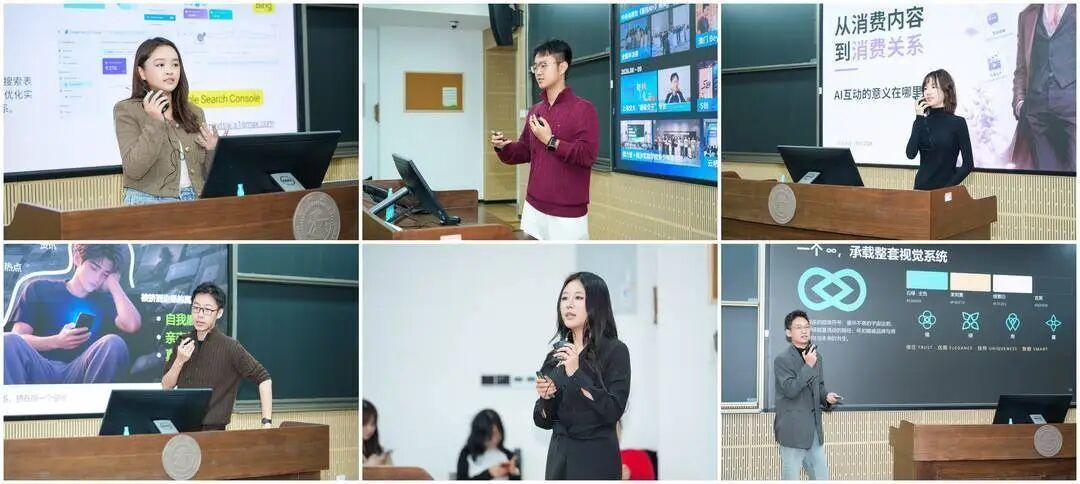
The showcases moved from infrastructure to specific applications, exploring what AI can offer users across work, creativity, and everyday life.
S1GMAXHelping AI understand brands
Keiko explored generative engine optimization (GEO), starting with clear, trustworthy information about a business. Website health, structured content, and ongoing measurement form the foundation for helping AI understand a brand. The session framed GEO as continuous work led by people who know the business, rather than a one-off content update.
SeeMemoryGiving AI lasting context
Co-founder and COO Ryan presented infrastructure for long-term personal AI memory. Memory Lab turns multimodal signals into structured memories, while Memory Echo manages what to retrieve, store, and share. The goal is to support services across personal devices, robots, and smart homes while keeping sensitive memories local.
Walala.aiFrom content to ongoing relationships
Co-founder and CEO Elody Yang explored interactive storytelling built around participation, evolving relationships, and co-creation. Creators define characters, worlds, and narrative rules, while AI extends interactions within those boundaries. The challenge is to balance content quality, freedom of interaction, and production efficiency.
PopGenieHelping people and AI adapt together
Co-founder and CTO Leo introduced BOBO, a portable Physical AI companion in development for young urban users. The session considered how feedback shapes everyday collaboration, how users can retain control of those experiences, and whether that learning can carry across to new devices or models.
AIsaTurning answers into reliable deliverables
Gretta explored what it takes for a one-person team to deliver business-ready results with AI. Connecting agents to real business data, traceable sources, and paid services helps move from plausible answers to dependable work. The session also examined agents purchasing data and services, with pricing agreed before execution and results that can be traced.
FlowEightKeeping human judgment in the creative process
Founder Chase shared how a small AI-native team is building a lifestyle brand rooted in Chinese cultural traditions. Its first product is a compass necklace that activates an AI agent, combining a traditional rules engine with language-model explanations. AI executes defined rules; people decide what is worth creating and how the brand should express itself.
From AI hype to real adoption
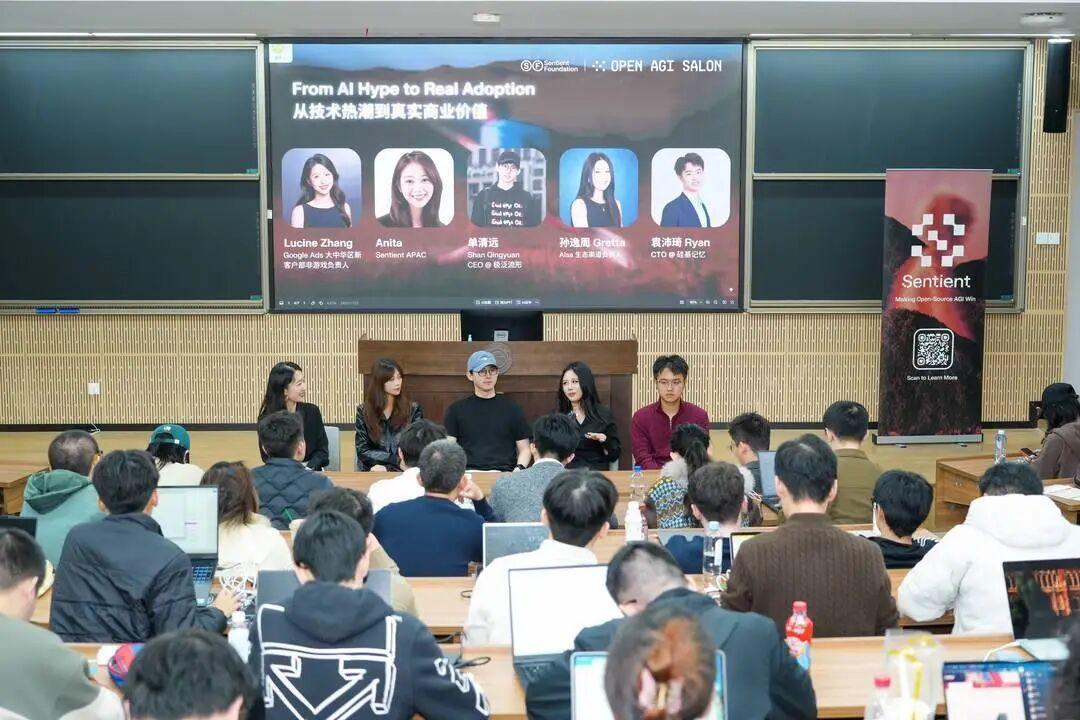
The closing panel brought together Lucine Zhang from Google Greater China, Anita from Sentient APAC, Shan Qingyuan, CEO of 极泛流形, Gretta from AIsa, and Ryan from SeeMemory. Under the theme “From AI Hype to Real Adoption,” they examined what makes AI products defensible, where product–market fit is emerging, and how to distinguish useful features from impressive demos.
The discussion returned to users: what brings someone back, which tasks matter enough to pay for, and why might a technically advanced feature go unused? Reaching mainstream audiences requires a clear understanding of the problem a product solves and how easily it fits into someone’s routine.
Keep building, keep learning
Across the afternoon, a common thread emerged: AI capability needs to translate into clear, repeatable value. That could mean more reliable information, memory that improves future interactions, richer creative experiences, or results a business can confidently use.
Thank you to every builder, speaker, and attendee who joined us at Shanghai Jiao Tong University. These questions continue through the products people build and the communities that help them improve. We look forward to seeing you at the next Open AGI event.
Read the original Chinese recap here.
Explore event recaps [ + ][ KEEP THE CONVERSATION GOING ]
Be part of what’s next.
Meet the people building open AGI. Join us at an upcoming Open AGI event.
Explore upcoming events